

Cooking with kids transforms mealtime into a fun and educational experience. It’s not just about preparing food; it’s an opportunity for children to learn valuable skills, explore their creativity, and bond with family. When kids step into the kitchen, they discover the magic of mixing ingredients and the joy of tasting their creations.
Benefits of Cooking with Kids
Cooking with kids transforms mealtime into an engaging and educational activity. It fosters skill development and enhances family connections.
Skill Development
Cooking equips children with essential skills. It promotes fine motor skills through tasks like chopping, stirring, and measuring. Cooking introduces them to basic math concepts, such as counting ingredients and understanding fractions. Children gain reading skills by following recipes and learning new vocabulary. Additionally, cooking cultivates critical thinking as they make decisions about flavors and ingredients.
Bonding Time
Cooking creates valuable bonding opportunities for families. It encourages teamwork as kids and parents collaborate on recipes. Sharing responsibilities enhances communication skills, leading to stronger relationships. Preparing meals together fosters a sense of accomplishment, strengthening emotional connections. Enjoying the final dish together reinforces the shared experience, turning cooking into a cherished family tradition.
Fun and Easy Recipes
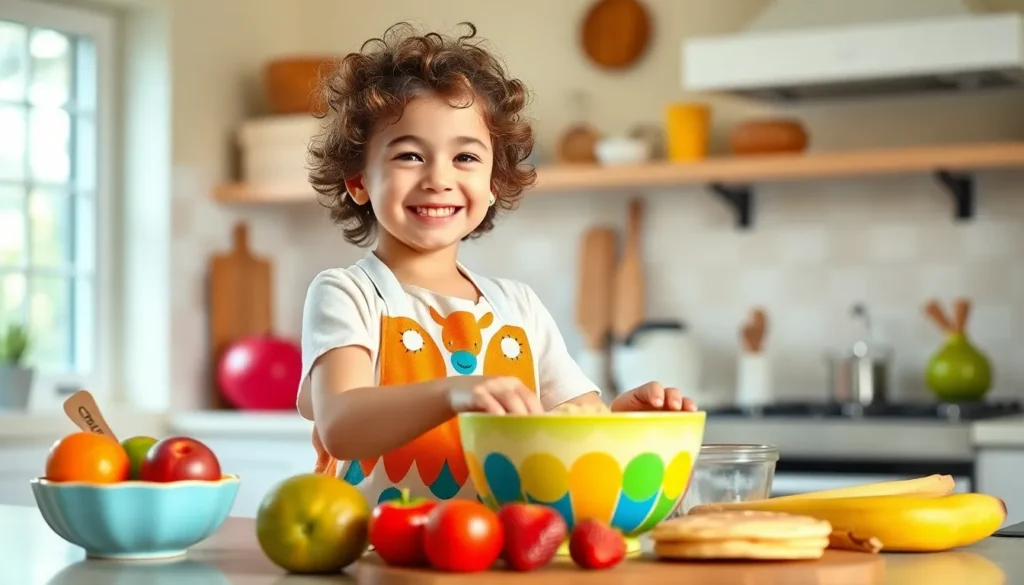
Cooking with kids can be a delightful adventure. Engaging in simple recipes provides an opportunity for creativity and learning.
Kid-Friendly Breakfast Ideas
- Fruit Pancakes: Combine mashed bananas with pancake batter. Kids enjoy mashing fruit and sprinkling blueberries on top.
- Yogurt Parfaits: Layer yogurt, granola, and fresh fruits. Children can mix their favorite ingredients, fostering personal choice.
- Egg Muffins: Whisk eggs with diced veggies and pour into muffin tins. Children can personalize their muffins with toppings like cheese or ham.
Quick Lunch Options
- DIY Sandwiches: Provide various spreads and fillings. Kids can build their sandwiches and experiment with flavors.
- Wraps: Use tortillas filled with hummus, vegetables, and meats. Children enjoy rolling up their creations for a fun, portable meal.
- Mini Pizzas: Top English muffins or pita bread with sauce and cheese. Kids love designing their mini pizzas with different toppings.
Safety Tips in the Kitchen
Prioritizing safety is essential when cooking with kids. Ensuring a safe kitchen environment fosters confidence and allows for enjoyable cooking experiences.
Supervision and Guidelines
Supervision is critical when children participate in cooking activities. Adults should always monitor children, especially during tasks that involve heat, sharp tools, or complex processes. Establish clear guidelines regarding kitchen behavior, such as:
- Keeping hands away from sharp knives to prevent cuts.
- Staying at a safe distance from the stove or hot surfaces to avoid burns.
- Washing hands before handling food to maintain hygiene.
- Not running or distracting others in the kitchen for safety reasons.
- Using utensils appropriately, emphasizing safety over speed or convenience.
Age-Appropriate Tasks
Assigning age-appropriate tasks ensures children engage safely and learn effectively. Here are suggested tasks based on age groups:
- Toddlers (2-4 years): Stirring ingredients, washing vegetables, and placing items in bowls.
- Preschoolers (4-5 years): Measuring ingredients, spreading spreads on bread, and decorating dishes.
- Early Elementary (6-8 years): Peeling fruits, chopping soft vegetables under supervision, and mixing batter.
- Older Children (9 years and up): Using kitchen appliances like mixers or blenders, following recipes independently, and cooking simple meals.
By matching tasks to skill levels, children gain confidence and competence in the kitchen.
Engaging Kids in Meal Planning
Engaging kids in meal planning can enhance their interest in food and nutrition. This process encourages ownership of their meals while fostering essential skills.
Creating a Grocery List Together
Creating a grocery list together promotes organizational skills and decision-making. Kids can review recipes and identify which ingredients are needed. They can also categorize items, fostering an understanding of food groups and nutrition. Assigning tasks, like checking pantry staples or researching new recipes, motivates kids to contribute actively. This interaction also presents opportunities to discuss healthy options and budget management, making shopping a collaborative effort.
Involving Them in Food Choices
Involving kids in food choices enhances their interest in trying new foods. Parents can offer a variety of options, such as different fruits, vegetables, or proteins, encouraging kids to select their favorites. Discussing flavors, textures, and colors adds an educational aspect, expanding their culinary vocabulary. Allowing them to experiment with meal components, like toppings or sauces, fosters creativity and autonomy. Engaging in conversations about benefits of balanced meals builds a foundation for lifelong healthy eating habits.
Cooking with kids creates lasting memories and invaluable life skills. It transforms the kitchen into a vibrant space for learning and creativity. As children mix ingredients and taste their creations, they not only develop essential skills but also strengthen family bonds.
Involving kids in meal planning and preparation encourages a sense of responsibility and teamwork. This collaborative approach fosters healthy eating habits and expands their culinary knowledge. With safety at the forefront, cooking together can be both fun and educational.
Embracing this shared experience enriches family life and instills a love for cooking that can last a lifetime.


