
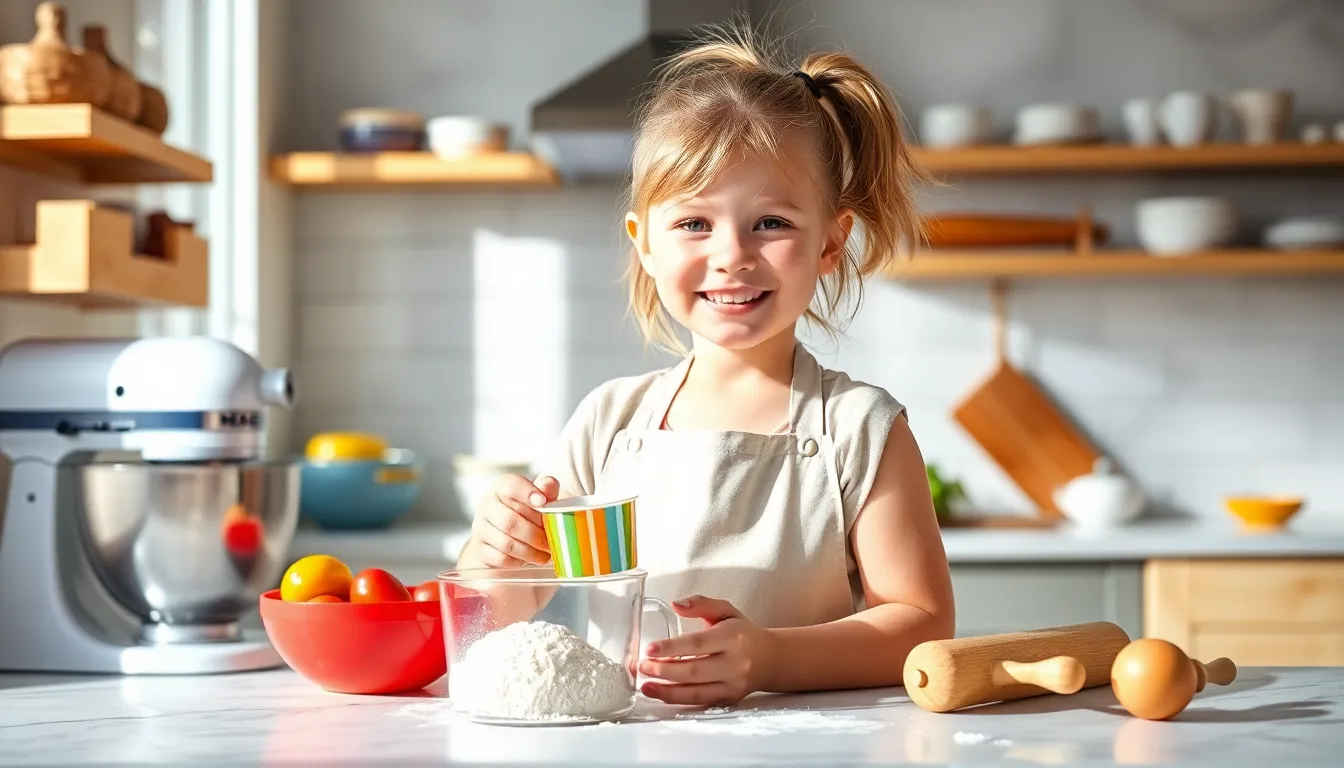
Kids in the kitchen? Absolutely! It’s not just about whipping up a batch of cookies or making a mess that rivals a flour factory explosion. Cooking with kids can spark creativity, boost confidence, and even sneak in some valuable life skills. Plus, who wouldn’t want a tiny sous-chef who can crack an egg and tell a joke at the same time?
Benefits of Cooking with Kids
Cooking with kids fosters essential skills and knowledge that benefit them beyond the kitchen. Engaging in these activities can create lasting memories while teaching valuable lessons.
Life Skills Development
Kids learn practical life skills through cooking. Measuring ingredients introduces them to math, and following recipes enhances reading comprehension. Understanding food safety teaches the importance of hygiene and responsibility. Handling kitchen tools, like knives and mixers, develops their motor skills and coordination. These experiences create a strong foundation for independent living in the future.
Boosting Confidence and Independence
Cooking empowers kids to feel accomplished. Completing a recipe reinforces a sense of achievement, boosting their confidence. Children gain independence by making decisions about meals and ingredients. They become more willing to try new foods and express creativity through cooking. Supporting their culinary efforts cultivates their self-esteem and encourages them to take on new challenges confidently.
Age-Appropriate Cooking Activities
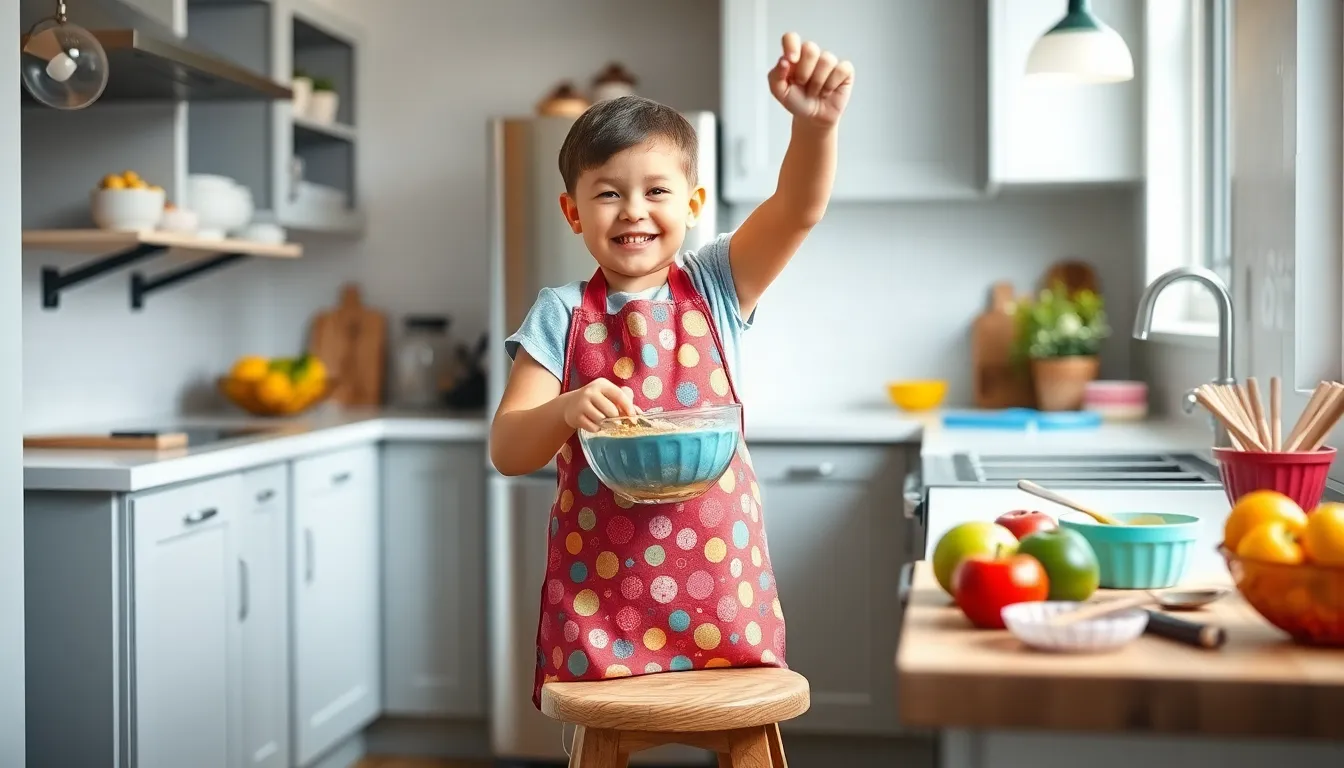
Cooking activities can adapt to suit different age groups, allowing children to participate safely and meaningfully in the kitchen.
Toddlers (Ages 2-4)
Toddlers thrive with simple tasks that require minimal skill. Pouring dry ingredients into bowls enables them to practice hand-eye coordination. They enjoy stirring mixtures with a wooden spoon, which fosters creativity. Cutting soft fruits with child-safe knives introduces them to food preparation while ensuring safety. Finger foods present opportunities for sensory exploration, allowing toddlers to discover colors, shapes, and textures through play.
Preschoolers (Ages 5-6)
Preschoolers benefit from more structured activities that build on their emerging skills. They can learn to measure ingredients using standard measuring cups. Following simple recipes engages their reading and comprehension abilities. Rolling dough for cookies or pizzas encourages fine motor skill development. Decorating baked goods allows preschoolers to express their creativity and see their efforts come to life. These fun activities also spark curiosity about ingredients and flavors.
School-Aged Kids (Ages 7-12)
School-aged kids can handle more complex cooking tasks that promote independence. Chopping vegetables with supervised help sharpens their knife skills and develops confidence. They can learn to read and interpret recipes, reinforcing math and reading comprehension. Following cooking techniques teaches them about food safety and kitchen cleanliness. As they prepare meals for the family, these responsibilities instill a sense of pride and accomplishment. Engaging in culinary adventures together nurtures problem-solving skills and creativity.
Safety Tips for Cooking with Kids
Cooking presents exciting opportunities for kids, but safety is essential. Teaching children kitchen safety rules ensures a fun experience without risk.
Kitchen Safety Rules
Kids should always wash their hands before cooking. Clean hands prevent the spread of germs. Avoid distractions while working in the kitchen. Focusing helps prevent accidents. Explain the danger of hot surfaces, sharp knives, and open flames. Ensure a safe cooking environment by keeping utensils out of reach when not in use. Children should stand at a safe distance from hot pots and pans. Encourage them to wear an apron to protect their clothes. Lastly, create a designated space for kids where they can confidently work. This space should be clear of hazards.
Using Child-Friendly Tools
Child-friendly tools make cooking safer and more enjoyable. Select age-appropriate utensils for kids. Use plastic knives for cutting soft foods, which minimizes the risk of injury. Choose small, lightweight pots and pans that are easy to handle. Non-slip mats can provide stability, preventing slipping during food prep. Silicone baking trays are another excellent option since they are easier to manage and clean. Teach children how to properly use these tools, enhancing their confidence and skills. Lastly, supervise their kitchen activities, especially when handling unfamiliar tools. This guidance ensures an enjoyable and educational cooking experience.
Fun and Easy Recipes for Kids
Cooking offers exciting opportunities for kids to explore flavors and develop culinary skills. Here are some engaging recipes perfect for young chefs.
Breakfast Ideas
Pancakes present a fantastic breakfast choice. Kids can mix flour, eggs, and milk to create a simple batter. Toppings like fruit or chocolate chips allow for creativity. Fruit smoothies serve as a nutritious option, too. Children can blend yogurt, berries, and banana for a tasty treat. Whole grain toast with peanut butter provides a delightful, protein-packed start to the day.
Lunch and Snack Ideas
DIY mini pizzas let kids customize their meals. Using pita bread, they can spread pizza sauce and add their favorite toppings, such as cheese and veggies. Veggie wraps make for another healthy option. Kids can layer hummus, sliced cucumbers, and lettuce in a tortilla. For a fun snack, homemade trail mix with nuts, seeds, and dried fruit proves delicious. These simple choices enhance healthy eating habits while being enjoyable.
Dinner Recipes
Simple stir-fry dishes allow kids to practice chopping vegetables like bell peppers and carrots. With adult supervision, they can quickly sauté these ingredients in a pan. Tacos offer another enjoyable dinner option. Kids assemble tortillas filled with ground beef, beans, and toppings of their choice, encouraging them to experiment. Lastly, pasta with tomato sauce requires boiling noodles and stirring in pre-made sauce, making it perfect for young cooks. These easy recipes combine fun with the opportunity to learn fundamental cooking skills.
Engaging kids in the kitchen opens up a world of learning and fun. It builds essential skills and nurtures creativity while creating cherished memories. By involving children in cooking, parents can foster independence and confidence that extend beyond meal preparation.
Safety is paramount in these activities, ensuring a positive experience for everyone involved. With age-appropriate tasks and fun recipes, kids can explore flavors and develop their culinary skills in a safe environment.
Ultimately, cooking together strengthens family bonds and empowers children to embrace new challenges with enthusiasm. Encouraging kids to take part in the kitchen not only enriches their lives but also lays the groundwork for a lifetime of healthy eating habits and self-sufficiency.


